BOLD (Bulgarian Community for Liberal Democracy) invites you to a discussion aimed at shedding light on the state of the armed forces, security services and civilian control (…)

BOLD (Bulgarian Community for Liberal Democracy) invites you to a discussion aimed at shedding light on the state of the armed forces, security services and civilian control (…)
This is the second event in the “Bulgarian Roads in the Shadow of War” series, in which we analyze the impact of the war on Bulgaria. This time, we will present the results of a research project (…)

From August 2022, BOLD (Bulgarians Organising for Liberal Democracy) is launching a year-long project “Building BOLD’s Capacity in Response to New Challenges”.


Димитрина Петрова: Добре дошли в BOLD Review
Това електронно списание е агрегатор, в който, заедно с новини от БОЛД, ви предлагаме подбрани висококачествени есета, статии, аудио- и видео-материали от най-добрите издания по света.
Dimitrina Petrova: Welcome to BOLD Review
This electronic magazine is an aggregator that, along with updates on BOLD’s work, features high-quality essays, articles, audio and video materials selected for you from the best global sources.
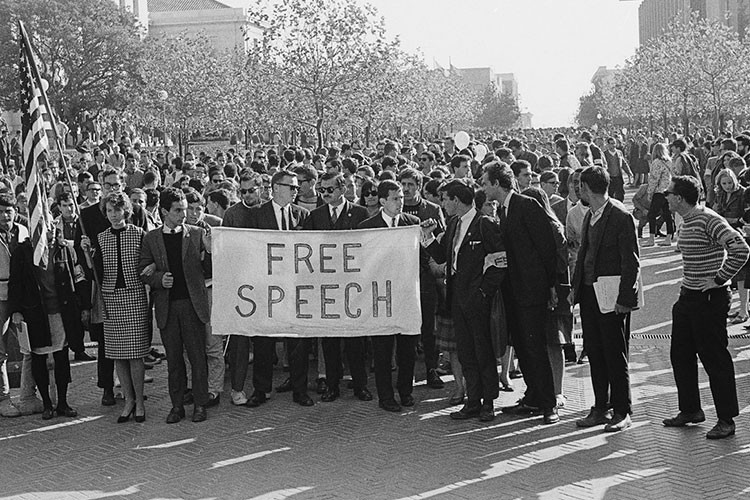
Podcast: Greg Lukianoff talks to Brendon O’Neill about the new fight for liberty in America
Председателят на Foundation for Individual Rights and Expression (FIRE) обсъжда защо прогресивните либерали (progressives) в САЩ се обърнаха против свободата на словото, и защо привържениците на свободата на словото трябва да престанат да се оправдават. (English: Listen here)

Tod Lindberg
Бурни събития често имат за ефект да усилят и утвърдят в главите на анализаторите техните виждания и препоръки отпреди събитието. Така ли се става и сега по повод на руската инвазия в Украйна ? (English: Read more)

Интервю
Николай Солдатников разговаря с Лев Маркович Шлосберг, руски политик (Яблоко), за трагедията, в която Путиновият режим хвърли народа на Русия. Смел, проникновен, човечен анализ на войната в Украйна и руското общесво, идващ до нас от другата Русия. (Русский: Смотрите)

Denis Bauchard
От идването на власт на Бениамин Нетаняху, политическият център на тежестта постепенно се преместваше надясно. Същевременно, процесите в страната доведоха до това да се поставя под въпрос вече самата израелска демокрация. (Français: Lire l’article)

Noah Carl
Едно от най-пресижните научни списания в света публикува проблематична статия, в която според скептика Ноа Карл науката е пожертвана в името на криворазбран активизъм в полза на равните права на хората с наднормено тегло. (English: Read more)

Virtual event at Hudson Institute
Има ли НАТО стратегия за Черно море? Какви военно-политически сценарии са възможни в сегашната ситуация? Може ли да се направи нещо, за да се осигури износа на храни за Близкия изток и Северна Африка, от който зависи прехраната на милиони хора в развиващите се страни? (English: Watch here)

Interview
Одри Танг, министър на дигитализацията на Тайван, говори за опасностите и перспективите пред демокрацията, в резултат на развитието на дигиталните технологии, и стратегиите за борба с инфодемията. (English: Listen here)


Алексей Левинсон
Видният руски социолог от Левада център реконструира логиката на руското правителство чрез анализ на данни от проучвания на населението. (Русский. Читайте)

Антоний Тодоров
Обвиняват левите като цяло в безкритично русофилство. При сегашната война в Украйна обвиненията са в „путинизъм“, „рашизъм“ и други позорни епитети. И въпреки това, че (особено в България) русофилството е широко разпространено сред левите, тази констатация се нуждае от по-обстоен анализ. (Български. Прочетете.)

Daniel Immerwahr
Ужасът на Хирошима и Нагасаки създаде страх от атомната бомба в целия свят – включително сред военните и лидерите, които можеха да натиснат ядреното копче. Днес този страх е почти напуснал живата памет, но заедно с него може би сме загубили и ключово предпазно средство. (English. Read more.)

Стоян Сугрев
Социологията е показала, че противно на всекидневната логика, в ситуация на изострен конфликт неутралитетът не прави по-вероятно прекратяването на конфликта. (Български. Прочетете.)

Anahid Nersessian
Рецензия на сборник поезия на иранската поетеса Фарух Фарохзад в превод на английски. С поезията си, особено еротичната, Фарохзад изразява сложността на женския избор през 20-ти век. (English. Read more)

Linda Greenhouse
В наскоро публикуван доклад на специално създадена от Джо Байдън президенска комисия се обсъжда спектърът от мнения по повод на възможната реформа на Върховния Съд на САЩ, включително премахване на пожизнения мандат на върховните съдии, увеличаване на броя им, и по-общо – ролята на Съда във функционирането на американската демократична система.(English. Read more)

Документален филм на Александра Жусе и Филип Лание
Как липсата на адекватна регулация на социалните медии позволи популисткият национализъм да разпространява омраза и лъжа. Този филм показва подводната част на айсберга на фалшивите новини в шетири страни – Бразилия, Индия, Италия и САЩ. (Français. Voir ici.)

Owen Gleiberman
Филмът на Арон Соркин „Процесът срещу чикагската седморка“ (2020) не само пресъздава атмосферата на известния процес от 1969 г., но ни предлага да видим днешните граждански протести в дългите сенки на 60-те. (English. Read more)
Димитрина Петрова: Добре дошли в BOLD Review
Това електронно списание е агрегатор, в който, заедно с новини от БОЛД, ви предлагаме подбрани висококачествени есета, статии, аудио- и видео-материали от най-добрите издания по света. (Прочетете повече)
Dimitrina Petrova: Welcome to BOLD Review
This electronic magazine is an aggregator that, along with updates on BOLD’s work, features high-quality essays, articles, audio and video materials selected for you from the best global sources. (Read more)
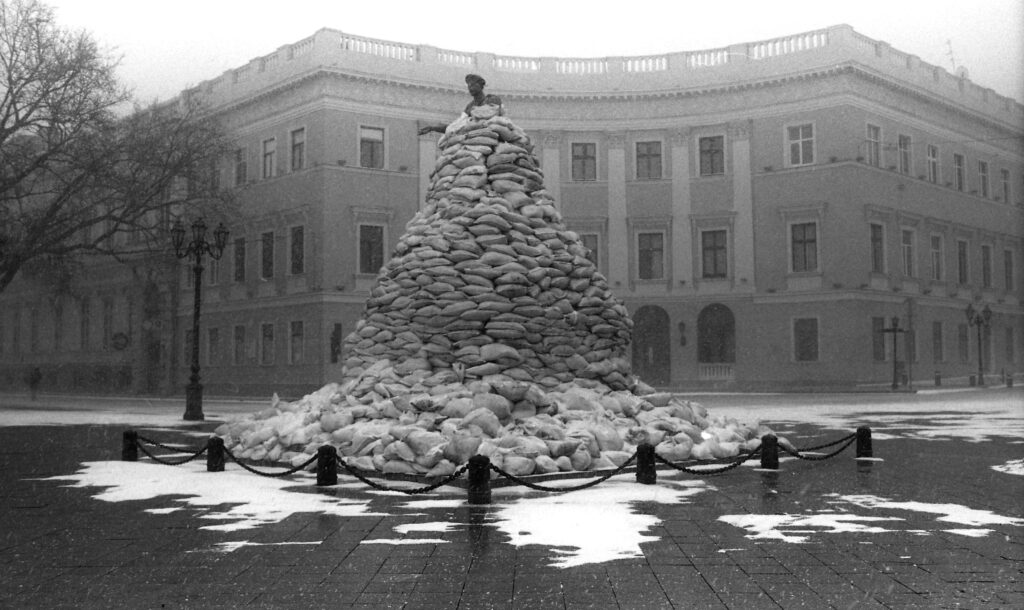
Ilya Kaminsky, Correspondence with Odesa Writers
Откъси от кореспонденция на поета Иля Камински с поети и писатели в Одеса: как живеят там през първите седмици след руското нападение. (English: Read more)

Интервю на Николай Солодников в неговия Telegram-канал #ещенепознер
Какво преживява руският интелектуалец дисидент днес? Режисьорът Александр Сокуров говори за войната, за която е забранено да се говори. (Русский: Смотрите)


Rajan Menon
Менон полемизира срещу онези, които недооценяват колко дълбоко и последователно е руското несъгласие с разширяването на НАТО, и пледира осъждането на агресивната война на Путин да се съвмести с визия за един по-справедлив ред за безопасност в Европа.
(English: Read more)

Lisa Pelling
Уроци от опита на Швеция, втората (само след Люксембург) страна в Европа по брой на успешно интегрирани бежанци като пропорция от населението. (English: Read more)

Rajan Menon
Domonique Desbois
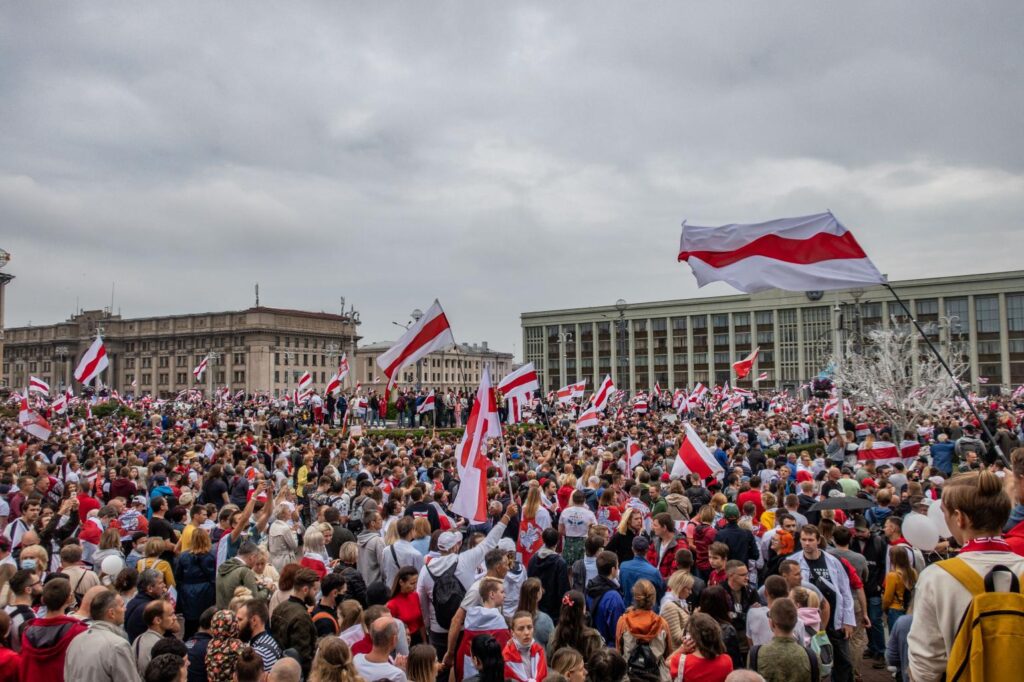
Манифестациите и стачките, които последваха избора на Александър Лукашенко за президент на Беларус през август 2020 г., продължиха чак до март 2021 г., въпреки жестоките полицейски репресии и ареста на повече от 30 000 души. (Français: Lire l’article)

Cam Simpson, Akshat Rathi, and Saijel Kishan
Какво се крие зад т.нар. ESG рейтинг на една компания? Дали се измерват екологичните (E), социалните (S) и управленските (G) въздействия на бизнеса им върху света, или по-скоро как екологични, социални и управленски рискове влияят на тяхната печалба? (English: Read more, or Listen to podcast)

J. Hoberman
Хоберман обсъжда филмите на Раду Юде и бурното развитие на новото румънско кино в последните три десетилетия, в контраст със застоя в другите бивши комунистически страни от Източна Европа. (English: Read more)

Abigail Abrams
Какво ще се случи с движението против абортите, ако Върховният съд на САЩ отмени свободата на избор, установена в делото Roe v. Wade? (Englsh: Read more)

We, the members of BOLD (Bulgarians Organising for Liberal Democracy) are watching with concern the development of the war in Ukraine. We admire the resolute resistance of the Ukrainian people and their […]

Източник: Култура, 14.11.2021, https://kultura.bg/web/обичащите-и-необичащите-народа-си
Преди известно време мой приятел изрече в разговор следната – наглед парадоксално звучаща мисъл: „Изглежда именно онези у нас – каза той – които се отнасят най-критично към „народа“, които произнасят по отношение на него най-тежки присъди, а често дори са отчаяни от него; които непрекъснато са в духовна крамола с него и все пак остават да живеят с този народ терзанията си, са и онези, които го променят, които го движат напред“.
Парадоксална, наистина, но – все повече се убеждавам – напълно вярна мисъл.
Защото онова, което обичайно се приема за патриотизъм и народолюбие – патетичните слова за „величието на народа“, за неговата „изконна мъдрост“; прехласването по „славното му минало“ („воините на Самуила“, „героите от Тутракан и Гургулят“ и т. н.) е всъщност абсолютно безусилно и може да се практикува от всеки социален мързеливец и егоист. То е – ще го кажа направо – лицемерен патриотизъм. Защото, да – тази истина е горчива, но би следвало да се прозре от всеки зрял и интелигентен човек – „народът“ сам по себе си (и във всеки един исторически момент) обикновено олицетворява инертността, духовното статукво. „Народът“ живее, мисли и действа по усвоения към настоящия исторически момент навик; живее според както е съумял да се приспособи към социалните, политическите и културните обстоятелства (каквито и да са те). Живее, фигуративно казано, в онова историческо леговище, което е успял да си засфери и да си „огради“ от потока на времето. И ето: онези политически или културни дейци, които искат да се „слеят с пулса на своя народ“, да се „проникнат от неговите традиции“ – по парадокс се превръщат в най-големите политически и културни без-дейници. В собствено политическата сфера те са онези „дейци“, които наричаме популисти, а в културната – каквито и да са претенциите им – онези, които са „дейци“ на масовата култура.
Напротив, ако си направим труда да се запознаем малко по-малко „дежурно“ с онези културни и политически фигури, които днес гордо нареждаме в „националния ни пантеон“, ще трябва да се удивим, че повечето от тях приживе по-скоро са били „отделени“ от „своя народ“ (а и народът по-скоро ги е остракирал от себе си). Принадлежали са именно към онзи тип хора, за които говори мисълта на моя приятел: били са „агресори“ в неговото настоящо историческо „леговище“, воювали са със статуквото, което „народът“ им си е създал, били са често пъти в остър манталитетен конфликт с изработените му „традиции“, а същевременно са били изтерзани, а нерядко и отчаяни от него. И ето: изглежда именно поради този конфликт, в който са проживели живота си, именно поради терзанието, с което са изтерзали самите себе си, те са… влезли в „националния пантеон“, в който няма и помен от прижизнените „народолюбци“ и „традиционалисти“.
Прочетете например какво пише Захари Стоянов за българите, след като в „Записки по българските въстания“ ни е описал т. нар. „Старозагорско въстание“ от 1875 г. Защото картината на това „въстание“, което той като свидетел ни представя, е изключително жалка. Месеци преди него – пише той – различни „героични родолюбци“ по одаи и трапези се кълнат и верят, че ще доведат в Стара Загора стотици (и даже хиляди) хора – от всичките села в района, казват че са се снабдили вече с оръжия, че народът е готов „като един“ да въстане срещу „поробителя-турчин“ и т. н. В уречения ден обаче никой не се появява. Година по-късно пък, призори по улиците на Панагюрище тръгват една шепа „луди глави“, сред които и Захари Стоянов, и започват да викат „Хайде събуди се, ти народ заспал“. В отговор народът… бързешком и с трясък захлопва кепенците на прозорците и заключва портите на къщите си.[1] Въстаниците, според свидетелството на Захари Стоянов, обикалят викайки в продължение на няколко часа абсолютно пустите улици на града, след което са принудени… да избягат далеч от него. Няма да цитирам какво казва по този повод за „народа си“ Захари Стоянов.
Прочетете по-нататък в биографията на Стефан Стамболов как той, в самия край на 1877 г., е принуден да обикаля по улиците на Велико Търново с бич в ръка (в буквалния смисъл на тази дума), за да събира насила от сънародниците си средства за нуждите на настъпващата руска армия „освободителка от петвековния османски гнет“.
Истината следователно е, че т. нар. в историческата наука „либерален национализъм“ на ХІХ в. през онези години у нас е бил дело на политико-културно (и да – елитно за своето време) малцинство – дело не „в съгласие“, а в изтерзаващ конфликт с мултиетничния ориентализъм, в който „по традиция“ и напълно доброволно (та даже и доволно) е живеел „народът ни“. В края на ХХ в. ние самите преживяхме нещо аналогично. След като комунизмът падна в цяла Източна Европа, през 1990 г. „народът“ в мнозинството си гласува за дотогавашната тоталитарна партия и активно недолюбваше „демократите с брадите“. Десетилетие по-късно пък буквално изтерза оня министър-председател, който най-сетне постави стопанството ни на европейски и некомунистически релси.
Ако сега от сферата на националната политика преминем към сферата на националната култура ние ще видим общо взето същото. Просто „обича“ ли – нека попитам – своя народ Алеко Константинов, стилизирайки го в невероятно репрезентативния за него (май че и до днес) образ на Бай Ганю? Или го бие, като със словесен бич, осрамва го – сам безспорно наранен от съвременния му „Бай Ганю“? Защото самият Алеко Константинов – знаем това – е интелектуалец с европейски и глобален културен светоглед. В този смисъл „народът-Бай Ганю“ е за него рана, а не „гордост“. За самия народ пък Бай Ганю е „елитарна дамга“, която му слага писателят и политикът Алеко Константинов. Те следователно са в конфликт. И ето: този конфликт, това Алеково не-народолюбие, нарежда Алеко Константинов в „националния пантеон“, докато „народът“ продължава да си обича (защото си го живее) „Бай Ганю“. Е, след Алеко Константинов вече помалко започва и да се срамува от него. Следователно, писателят е постигнал нещо за народа си, именно… осмивайки го.
Още по-нататък: в началото на ХХ в. една група писатели и литератори с отчетливо авангардни за времето си нагласи буквално „взривяват“ дотогавашния български литературен „канон“, създавайки кръга „Мисъл“. Влизат – това трябва да се знае – в остър конфликт с масовизиралото се „Вазовство“. При това са и екстраординерни личности, такива, които „народът“ обикновено злостно одумва и заради индивидуалистичната им екстраординерност остракира от себе си. Една от основните фигури в този кръг е Пенчо Славейков. Знаете ли, че цялата му духовна биография е интелектуална и манталитетна борба с „българщината“ – че от висотата на европейската си образованост той често дори презира „своя народ“, а в края на живота си е направо отчаян от него и завършва жизнения си път в нещо като съзнателна емиграция. Умира в италианското градче Комо, съвсем близо до швейцарската граница, като в последните месеци от живота си произнася думите: „Дано ми даде Бог тук аз да доживея последните си дни далеч от родний край…“ Тези думи и до днес стоят изписани на български и италиански върху паметната плоча на къщата, в която умира, положена от български студенти от Падуа. Ще каже ли някой обаче, че воювалият цял живот с родното духовно статукво и молещ Бога да умре „далеч от родний край“ Пенчо Славейков, не е придвижил българската култура напред именно със своята борба с „традициите ѝ“, със своята изтерзаност и даже отчаяност от „родното статукво“? Та Пенчо Славейков е единственият български писател, номиниран за Нобелова награда за литература.
Какви са следователно Захари Стоянов, Стефан Стамболов, Алеко Константинов, Пенчо Славейков – а ако си направим труда да се осведомим отвъд романтическата ни историография и повечето фигури от „националния ни пантеон“ – обединители или раз-единители на народа ни? Популистки обгрижващи и възпяващи историческото му „леговище“ или дръзко „разбутващи“ го? Какви са – народо-любци или народо-мразници? „Горди“ с народа си или терзаещи се от (но и за) народа си? И защо именно те – такива каквито са – са го придвижили напред в историята му? Защо те – авангардните, остро критичните, воюващите, създаващи раз-единение, ре-формиращите и често тръгващи си от историческата сцена изтерзани, в последна сметка формират „националния пантеон“, а онези, които ни зоват да се „обединим“, да се „помирим“, да „дадем на народа си спокойствие“, колкото и време да се радват в настоящето си на „народната любов“, отиват в миманса на историята?
[1] Щом стъпихме на улицата, и запяхме бунтовната песен:
Ха, народ поробен,
що си тъй заспал,
ил живот свободен
теб не ти е мил! —
и пр.
Всеки може да си въобрази като какво впечатление трябваше да произведе нашето появлявание на улицата не само на жените, на децата, на ония, които не бяха ни виждали, но и на някои от ближните ни познайници. Улицата, през която вървехме, беше пуста; тук-там се чуваше силното затваряние на портите;… Вратите и кюпенците на дюгените заплющяха ужасно, като че всичката чаршия да беше изпълнена с ковачи, и в две или три минути всичко опустя напредя ни. Стоянов, Захари, Записки по българските въстания. Разказ на очевидци, 1870–1876. (София: „Български писател“, 1977), i–iii, 394-395
За автора: Проф. дфн Калин Янакиев е преподавател във Философския факултет на СУ „Св. Климент Охридски”, член на Международното общество за изследвания на средновековната философия (S.I.E.P.M.). Автор на книгите: „Древногръцката култура – проблеми на философията и митологията“; „Религиозно-философски размишления“; „Философски опити върху самотата и надеждата“; „Диптих за иконите. Опит за съзерцателно богословие“; „Богът на опита и Богът на философията. Рефлексии върху богопознанието“; „Три екзистенциално-философски студии. Злото. Страданието. Възкресението“; „Светът на Средновековието“; „Res Vitae. Res Publicae. Философски и философско-политически етюди от християнска перспектива“; „Европа–Паметта– Църквата. Политико-исторически и духовни записки“ (текстове, публикувани в Портал Култура). През 2016 г. излезе юбилеен сборник с изследвания в чест на проф. Калин Янакиев „Christianitas, Historia, Metaphysica“. Най-новата му книга е „Христовата жертва, Евхаристията и Църквата. Студии върху библейските основания“ („Комунитас“, 2017).

Tristran Haris, TED Talk
Source: TED Ideas worth spreading 2017
A handful of people working at a handful of tech companies steer the thoughts of billions of people every day, says design thinker Tristan Harris. From Facebook notifications to Snapstreaks to YouTube autoplays, they’re all competing for one thing: your attention. Harris shares how these companies prey on our psychology for their own profit and calls for a design renaissance in which our tech instead encourages us to live out the timeline we want.
ABOUT THE SPEAKER
Design thinker Tristan Harris helps the technology industry more consciously and ethically shape the human spirit and human potential.

Martha Nussbaum
Source: Boston Review, 18 February 2020, https://bostonreview.net/articles/martha-c-nussbaum-tk/
Victim anger can be useful to the political struggle, but it can also become excessive and obsessive, deforming the self.

“Thus did every type of bad practice take root in Greece, fed by these civil wars. Openness, which is the largest part of noble character, was laughed down; it vanished. Mistrustful opposition of spirit carried the day, destroying all trust. To reconcile them no speech was strong enough, no oath fearful enough. All of them alike, when they got the upper hand, calculating that security was not to be hoped for, became more intent on self-protection than they were capable of trust.”
—Thucydides, The Peloponnesian Wars
Hecuba’s Transformation
It is the end of the Trojan War. Hecuba, the noble queen of Troy, has endured many losses: her husband, her children, her fatherland, destroyed by fire. And yet she remains an admirable person—loving, capable of trust and friendship, combining autonomous action with extensive concern for others. But then she suffers a betrayal that cuts deep, traumatizing her entire personality. A close friend, Polymestor, to whom she has entrusted the care of her last remaining child, murders the child for money. That is the central event in Euripides’s Hecuba (424 BCE), an anomalous version of the Trojan war story, shocking in its moral ugliness, and yet one of the most insightful dramas in the tragic canon.
From the moment Hecuba learns of Polymestor’s betrayal, she is a different person. Unable to repose any trust in anyone, unwilling to be persuaded, she becomes utterly solipsistic and dedicates herself entirely to revenge. She murders Polymestor’s children and puts out his eyes—symbolizing, it would seem, the total extinction of their relationship of mutuality and care, as well as her own refusal of friendly reciprocal vision. Polymestor wanders onstage blind, crawling on all fours like the beast he always was. At the end of the play, it is prophesied that Hecuba will be transformed into a dog—an animal the Greeks (wrongly) associated with rabid pursuit of prey and a total lack of interpersonal concern. As Dante summarizes her story in the Inferno, “deranged, she barked like a dog: so far had anguish twisted her mind.”
Hecuba is not just grief-stricken: she is stricken, as well, in the very core of her moral personality. She can no longer sustain virtues that used to define her as a human being, friend, and citizen. In depicting her transformation, Euripides clearly inverts the mythic creation of citizenship and human community depicted in the final drama of Aeschylus’s Oresteia (458 BCE), by then a famous creation story of the Athenian democracy. Initially the Furies, grim goddesses of revenge, are said to be like dogs, sniffing after their prey, incapable of love or justice. But at the end of the play, they agree to trust the promises of goddess Athena and to adopt a new way of thinking characterized by “mildness of temper” and “a mindset of communal friendship.” They stand up, receive the robes of adult citizens, and celebrate the law-abiding justice of the city.
Aeschylus’s moral is that a political community must abandon the obsessive pursuit of revenge and adopt an idea of justice that is both law-governed and welfare-oriented, focusing not on hunting one’s prey but on deterring bad behavior and producing prosperity. For Euripides, however, moral trauma can cause the collapse of trust and the other-regarding virtues, producing a revenge-obsessed parody of real justice. Euripides’s grim drama is part of a long tradition of reflection, in the Greco-Roman world, about the damage that events beyond people’s own control can do to them as they aim to lead a flourishing human life, a life that includes acting in accordance with all the major virtues. The most prominent conclusion of this tradition is that events people don’t control can block them from acting in socially valuable ways. By removing political citizenship, friends, family, and the wherewithal to act in society, such events may prevent a person from living a completely flourishing life, what the Greeks called eudaimonia. Just having the virtues inside, as Aristotle and others stress, is not enough, if one is radically cut off from acting. But Hecuba suggests a more radical conclusion: such events can also corrode the virtues themselves, producing moral damage of a long-standing sort. The first sort of damage can be reversed: an exiled person can be restored to citizenship, the friendless can acquire new friends. But Hecuba’s damage lies deeper, in longstanding patterns of action and aspiration that form part of her character. Particularly vulnerable are the relational virtues, patterns of friendship and trust. Bad treatment at the hands of others—experiencing a violation of trust—can make people worse.
How can this be? How can the crimes of Polymestor undermine Hecuba’s virtue? Aristotle appears to deny the possibility, holding that a good person will be firm in character and will “always do the finest thing possible given the circumstances,” amid the blows of fortune, although perhaps, in extreme circumstances, falling short of full eudaimonia. Most tragic dramas agree, portraying heroes and heroines who remain noble under fortune’s blows. The character Hecuba in Euripides’s play The Trojan Women is just such a noble figure, showing love, leadership, and the capacity for rational deliberation in the midst of disaster. His Hecuba, virtually unique in the Greek tragic corpus, depicts tragic events in all their potential ugliness, showing us that their cost is often greater than our stories reveal. For this reason, the play has been valued low through most of the modern era, dismissed as repugnant and a mere horror show. As scholar Ernst Abramson observed in 1952, it came to the fore again in the light of the grim events of the twentieth century, which have shown that good character is more fragile than we like to think.
• • •
Immutable Virtue?
It is attractive for feminists to believe that victims are always pure and right—women and other victims of injustice. Often they are inspired by a prevalent modern philosophical view: the good will is not affected by contingencies beyond people’s control. Immanuel Kant is one of the most influential sources for this view, although it has ancient Greco-Roman antecedents in Stoic ethics (which influenced both Christian ethics and Kant), and it also corresponds to some strands within Christian thought. Kant says in the Groundwork for the Metaphysics of Morals (1785) that even if the good will has no chance at all to accomplish anything, “yet would it, like a jewel, still shine by its own light as something which has its full value in itself. Its usefulness or fruitlessness can neither augment nor diminish this value.” The jewel image clearly implies, further, that the will cannot be corrupted by those same external circumstances. People who hold this view may also be inspired by a well-known psychological tendency known as the “just world” hypothesis: if there is misery, it must be deserved. If no desert, no deep harm.
Early in the feminist tradition, the Kantian view was called into question. Mary Wollstonecraft analyzed the damage women’s personalities and aspirations suffer under inequality. She claimed that women all too often exhibit servility, emotional lack of control, and lack of due regard for their own rationality and autonomy. These, she argued, are morally bad traits that women have been nudged into by their dependence on the good will of men. Criticizing Jean-Jacques Rousseau, who praised the coy and submissive Sophie as a norm for female character, she insisted that women, just as much as men, should have the opportunity to grow into fully autonomous agents, winning self-respect and the respect of others for their dignity and self-authored choices. When they are denied this opportunity, they suffer damage at the very core of their being.
In a similar vein, John Stuart Mill insisted in The Subjection of Women (1869) that one of the worst aspects of the male “subjection” of women is its mental and moral aspect:
“Men do not want solely the obedience of women, they want their sentiiments. All men, except the most brutish, desire to have, in the woman most nearly connected with them, not a forced slave but a willing one, not a slave merely, but a favorite. They have therefore put everything in practice to enslave their minds. The masters of all other slaves rely, for maintaining obedience, on fear: either fear of themselves, or religious fears. The masters of women wanted more than simple obedience, and they turned the whole force of education to effect their purpose. All women are brought up from the very earliest years in the belief that their ideal of character is the very opposite to that of men; not self-will, and government by self-control, but submission, and yielding to the control of others.“
Because women are brought up this way, and because, in their socially and legally powerless condition, they cannot obtain anything except by pleasing men, women think that being attractive to men is the main thing in life.
“And, this great means of influence over the minds of women having been acquired, an instinct of selfishness made men avail themselves of it to the utmost as a means of holding women in subjection, by representing to them meekness, submissiveness, and resignation of all individual will into the hands of a man, as an essential part of sexual attractiveness.”
These insightful observations have been taken up in recent times by social scientists working on the deformation of preferences under conditions of inequality. Jon Elster’s Sour Grapes (1983) used the idea of “adaptive preferences” to explain the long persistence of feudalism, and the fact that the revolutions of the eighteenth century required a revolution in consciousness before a change in rights could be achieved. Elster took his title from Aesop’s fable in which a fox, learning quickly that the grapes he initially wants are out of reach for him, quickly schools himself not to want them and calls them “sour.” Other scholars working on these phenomena have emphasized that deformed preferences can be found even earlier in life, so that people learn never to want the attractive thing in the first place—thus echoing Wollstonecraft’s and Mill’s observations about women. Economist Amartya Sen has found deformed preferences in subordinated women even where their own physical strength and health is concerned. I have developed the same idea in connection with preferences about higher education and political participation.
But modern feminists have some strong reasons for sticking to the Kantian view. Victim-blaming is ubiquitous as a strategy of subordination. It comes easy to the proud to construct fictions of their own moral superiority, portraying the subordinated as in some sense deserving their subordination because of intellectual and moral inferiority. Colonial domination was typically “justified” by arguments alleging that the dominated people are like children, needing firm control. Even the usually clear-eyed Mill said this about the people and cultures of India (while in the employ of the British East India Company). In our own time we have all heard such denigrations of African Americans and African American culture as excuses for white dominance: the black family is allegedly morally inferior to the white family, black culture to white culture. Indeed such victim-blaming is a virtual trope of recent conservative thought about race. As philosopher Lisa Tessman says of one such critic in Burdened Virtues (2005), “His account leaves no space for implicating the oppressive social systems that cause moral damage.” A substantial feminist literature raises doubts about the concept of adaptive preferences as applied to women, for similar reasons. There is no subordinated group that has not been systematically charged with preexisting moral deficiency—charges that deny the extent of damage that domination does to the subordinated.
It seems crucial for people seeking justice to face these grim facts and their moral toll. There are delicate issues here: Up to what point is social damage merely a source of unhappiness, and at what point does it eat into the moral personality? How far do subordinated peoples really internalize and act out the negative image of themselves purveyed by their dominators, thus—as Wollstonecraft and Mill argue—failing to achieve key moral virtues? One must approach the complexity of these issues subtly and yet frankly. It does no good to pretend that everything is rosy when people are schooled to servility and deprived of encouragement for autonomy. Indeed such a pretense plays into the hands of dominators by implying that what they have done is merely superficial.
In general, here’s how the world looks to me. First, dominators usually have a defective moral culture that rationalizes their domination in many ways, not least by its victim blaming. Second, one thing they typically do in order to maintain their power is to encourage servility and an absence of autonomy and courage in the subjugated. They also inflict trauma by cruelty, one purpose of which is to break victims’ spirit. Sometimes they fail: people have great resources of resilience and insight, and can indeed shine like jewels in the worst of circumstances. But sometimes they succeed, and that success is the dominators’ deepest moral crime.
Women are especially likely to exhibit a complicated mixture of moral overcoming and moral damage. Unlike most subordinated groups, they live in intimate proximity to their dominators. This is good for them in a way, since it means that they may be well fed, cared for, even educated. But it is also bad for them: the intimate context contains depths of cruelty that are not always present outside of intimacy, and needs for boundless submission on the part of the thirsty proud. In a 1980 essay in Ethics entitled “Racism and Sexism,” African American philosopher Laurence Thomas predicted that sexism would prove more difficult to eradicate than racism, because males had a stake in the domination of women (expressed, for example, in the phrase “a real man”) that whites do not typically have in the domination of blacks (no parallel phrase “a real white,” or so he said). Thomas’s article received a lot of sharp critiques, and, forty years later, it does seem that he is wrong about the depth of racism in U.S. culture. What he said, however, is surely true of sexual orientation prejudice as compared with sexism in U.S. society. Sexual orientation prejudice has dropped away with startling rapidity—in part because dominant straight society has no stake in it. There is no concept of the “real straight” that entails ongoing subordination of LGBTQ people. With gender, given the usually intimate context, the stake males have in producing pliant women remains high.
• • •
Moral Damage in Feminist Thought
Feminist philosophers have not typically been uncritical Kantians. Kant and white male Kantians did not need to wrestle with sexual violence, domination by a spouse, or the myriad problems that child care and domestic work pose for women’s aspirations. They, and their twentieth-century followers, casually asserted things about virtue that were false: for example, that two valid moral claims could never conflict. One way that luck influences virtue, as the Greek tragic poets knew well, is precisely by producing such conflicts, in which it seems that whatever one does, one will be slighting the claims of some important commitment or virtue. Kant simply denied that this ever happened, and many followed him.
Female philosophers of my generation questioned that denial. Juggling child care and work, we knew that circumstances beyond good people’s control often produced painful contingent moral conflicts, particularly in an unjust society. We had allies among leading male philosophers—particularly Bernard Williams (who actually did a lot of child care and, in general, understood women’s demands with a rare sensitivity). But it was far more difficult for powerless young women to make bold countercultural claims than for a dominant male, who had, in addition, served as an Royal Air Force pilot during his national service.
We did persist, however. And although outstanding female philosophers have worked in the Kantian tradition (often showing its complexities and tensions)—women such as Onora O’Neill, Christine Korsgaard, Barbara Herman, Marcia Baron, and Nancy Sherman (also an Aristotelian)—on the whole, women doing explicitly feminist philosophy have rarely been Kantians, because they have felt that Kant denied truths of their experience. Barbara Herman did show surprisingly, and cogently, that Kant has important insights about the urge for domination inherent in sexual relations. But hers was a late attempt to show feminists who had dismissed Kant that he actually had something to offer them, as indeed he does. My own approach to the topic of objectification is infused with Kantian ideas, and I have learned a lot from the views of Herman and Korsgaard—as well as, of course, the great (Kant-inspired) John Rawls. For the most part, however, feminist philosophers have been drawn to other sources and have used other insights to craft views that take the damages of domination seriously.
A pioneer in this area was Sandra Bartky. Already in 1984, in her essay “Feminine Masochism and the Politics of Personal Transformation,” she insisted—as had Wollstonecraft before her—that many of women’s emotions and character traits have been shaped by a system of domination to serve its ends. She insisted that views that deny the possibility of such damage are highly superficial:
“Those who claim that any woman can reprogram her consciousness if only she is sufficiently determined hold a shallow view of the nature of patriarchal oppression. Anything done can be undone, it is implied; nothing has been permanently damaged, nothing irretrievably lost. But this is tragically false. One of the evils of a system of oppression is that it may damage people in ways that cannot always be undone.”
In another valuable essay, “Foucault, Femininity, and the Modernization of Patriarchal Power,” she described—echoing Mill, but with far greater specificity—the production of an “ideal body of femininity” that serves male interests, being slender rather than massive, weak rather than muscular. I would add that this was written when women were forbidden to run in marathons on the grounds that this would tax their frail reproductive organs, and in which female tennis players were upbraided for looking muscular. (Chrissie Evert represented the “good” woman, Martina Navratilova, who introduced serious weight training to the tennis regimen, the “bad” woman.)
My own work on “moral luck,” in The Fragility of Goodness (1986), was not explicitly feminist, but was inspired both by life and by discussions with other women. And valuable work on moral luck began to crop up all over the profession. Claudia Card took aim at the ideal of women as caring helpmeets in the work of such people as Carol Gilligan and Nel Noddings. Making eloquent use of Friedrich Nietzsche, she argued that the valorization of self-abnegation is a kind of slave morality: women, feeling themselves powerless, give the name of virtue to traits that powerlessness has imposed upon us. (Related insights were developed already in 1973 by a male Kantian, Thomas Hill, in an important essay, “Servility and Self-Respect,” which explicitly alludes to the way a male-dominated society requires servile behavior of women.)
In a related vein, Marcia Homiak, a distinguished Aristotle scholar, argued in a series of articles that real virtue requires enjoyment of one’s own activity and a type of “rational self-love” cultivated in confident relationships with others—and that sexism has all too often robbed women of that joy and that confidence. Her insights have been too little heralded, and feminists should make them central.
In 2005 Tessman contributed an important systematic study on the whole phenomenon of moral damage in the context of feminist struggle and resistance. Following the example of those who draw on ancient Greek thought, but with valuable contemporary elaboration, Tessman argues in Burdened Virtues that in a variety of ways sexism damages the subordinated self. She concludes that thinking seriously about equality means thinking, as well, about the need to repair the damaged self, supporting the cultivation of virtues that domination has made difficult.
Thinkers in this tradition can still stress, as many do, that we must listen to the narratives of victims and give their account of their own experience some degree of priority. That epistemic correction is important, since members of subordinated groups have typically been denied an equal status as knowers and givers of testimony. Listening never means listening with no critical questions, and the possibility that moral damage is distorting the narrative—often in an “adaptive” direction, denying real wrongs—ought to be with us always as we listen.
• • •
Is Retributivism a “Burdened Virtue”?
Tessman makes a further valuable point about the virtues. The struggle against systematic wrongdoing, she argues, requires a specific battery of traits that may be virtuous in the context of the struggle—advancing its goals—but not as elements in the life of an agent striving to live well. A type of uncritical loyalty and solidarity, for example, may be required in a political struggle, and yet it may not equip us for the best, most reciprocal types of friendship. We can think of many further cases.
Consider two cases, closely related, that point us back to Euripides’s play. The first is the denial of trust and friendship to those on the “other side.” The second is a focus on retributive anger. Tessman explicitly remarks on the latter: she says that this type of victim anger is useful to the political struggle, but that it can also become excessive and obsessive, deforming the self. So people have a tragic choice before them: either fail to fit oneself maximally for struggle, or do so, but lose some of the richness of a fully virtuous personality.
I agree with Tessman that in both of the cases I have named there is distortion of the personality, but I don’t agree that this distortion is useful for a liberatory struggle. We don’t have a tragic choice after all, although we do have the extremely difficult task of waging a difficult struggle without poisoned weapons. If we want reconciliation and a shared future in the long run, we had better figure out how not to slip into burdened so-called virtues.
Let’s think first of mistrust of all people on the “other side.” Hecuba learned only that Polymestor was untrustworthy, but she concluded that all men are untrustworthy. This is a common move in feminism (as in other struggles for equality). In my time, heterosexual women were often charged with disloyalty to the feminist cause, and the phrase “woman-oriented woman” was used to mean both “feminist” and “lesbian.” Some otherwise admirable feminist groups also advised their members not to collaborate professionally with males. (The same tendency can be found in other movements for equality.)
I gave my book chapter on Hecuba as a Eunice Belgum Memorial Lecture after her tragic suicide. A gifted PhD classmate of mine, Eunice had gotten a good job at a liberal arts college. Once there, she co-taught a class on feminism with a male (feminist) faculty member. At a meeting of the Society for Women in Philosophy (SWIP), of which Eunice was a member, she was denounced for betraying the cause by cooperating with a male faculty member. Her parents told me that she made many phone calls the day she committed suicide, including to female students in her class to apologize for corrupting their consciousness by trusting a male faculty member. I felt and feel that Eunice was (originally) correct and that SWIP was wrong. If we can’t form carefully sifted cooperations with well-intentioned people on the “other side,” we have no hope of eventual reconciliation. Thus the refusal of trust is not a “burdened virtue” in Tessman’s sense: it is not useful, and it retards the progress of the struggle.
Indeed, sometimes a struggle requires trust even without solid evidence of intentions. Nelson Mandela was no credulous weakling. His ability to trust others was combined with a secure and advanced critical capacity. Throughout the struggle in South Africa, he formed close bonds with white allies (including Denis Goldberg, a Rivonia codefendant, and Albie Sachs, later a distinguished judge). These friendships were carefully sifted over the years, partly through Mandela’s close ties to the South African Jewish community. Here, trust was well founded. But Mandela also took some risks in the trust department. During coverage of his funeral in 2013,
I remember seeing a middle-aged policeman recall, with tears in his eyes, a moment during Mandela’s inaugural parade as president in 1994. Mandela got down from his car to talk to a group of young police recruits, all white as of course they were. He shook their hands and said, “Our trust is in you. Our trust is in you.” They had expected only hostility and retribution from Mandela, and he offered them his trust. In this case, unlike those of Sachs, Goldberg, and so many others, the trust had not been earned or scrutinized. But the men were young and malleable, and Mandela proposed to leverage friendship and trustworthiness by behaving in a friendly and trusting manner. I think this is the right direction for us all. The Hecuba reminds us that, without trust (which is never perfectly secure), there is no hope of community.
Let’s now think about anger. The feminist case for anger imagines anger as vigorous protest, the opposite of servile inactivity. As such, anger looks strong, indeed essential. However, we must begin by making a distinction. If we analyze anger into its component parts, as a long philosophical tradition in both Western and non-Western thought has done, it includes: pain at a perceived wrongful act that is thought to have affected the angry person, or some people or causes she cares a lot about. Here we already have lots of room for error: the person may be wrong about whether the act was wrongfully inflicted rather than just accidentally; she may be wrong about its significance. But let’s suppose that these thoughts withstand scrutiny: then anger (thus far) is an appropriate response to wrongdoing. It expresses a demand: this is wrong, and it should not happen again. It alludes to the past, but it faces forward and proposes to fix the world going into the future.
This is the type of anger that I have called transition anger, because it registers something that has already happened, but turns to the future for a remedy. This type of anger may be accompanied by proposals to punish the offender, but these proposals will understand punishment in one or more future-directed ways: as reform, as expression of important norms, as “specific deterrence” for that same offender, and as “general deterrence” for other offenders contemplating similar crimes.
Transition anger is indeed important for a struggle against injustice. It is outraged protest, and protest is important to draw attention to the wrong and energize people to address it. Nor does this type of anger “burden” the personality. It is exhilarating and liberating to face forward and imagine solutions to problems. Nor does this type of anger risk becoming obsessive or distorted.
However, let’s face it: this is not all that people usually mean by anger. Anger is rarely pure of a further element (present in all the philosophical definitions of anger I know, including Gandhi’s): the wish for payback, for commensurate pain to befall the aggressor. I’ve already said that transition anger can give a useful role to punishment, so it’s tricky to distinguish the future-directed type from the purely back-directed retributive type. But people are usually not pure in their orientation to future welfare. When struck, their impulse is to strike back. They so easily imagine that a counterbalancing pain on the other side annuls or undoes their pain or wrong. Hence the widespread support for capital punishment among relatives of homicide victims. Capital punishment has never been shown to have deterrent value. People call for it because of its alleged proportional retributive fittingness. Your child’s death is made good by the criminal’s death, or so it is all too easy to think.
We all know victims who focus obsessively on retributive fantasies and plans toward those who have wronged them. Virtually the entirety of divorce and child custody litigation is retributive in spirit, rarely aimed at equity and general welfare. Our major religions nourish retributive fantasies: the book of Revelation, for example, deserves Nietzsche’s judgment that it is an ugly revenge fantasy. And a study of the way “victim impact” statements have figured in criminal trials shows that they serve largely to ramp up the demand for harsh punishment of a retributive sort. Past injuries, however, are past. Pain creates more pain and does not repair the original injury. The proportionality of pain to past pain is, by itself, never a reason for a harsh punishment, and it typically distracts from the task of fixing the future.
Both Western and Indian philosophical traditions (the only non-Western ones I know enough about to speak) judge that ordinary anger is retributive; what I have called transition anger is exceptional. Studying the breakdown of marriages and friendships, one is inclined to agree. However, the numbers don’t matter: it is the distinction that matters, and this distinction has simply not been clearly made, throughout the whole philosophical tradition.
Transition anger is useful in a struggle and does not burden the personality. Retributive anger burdens the personality—and is not very useful in a struggle for freedom. Martin Luther King, Jr., the one distinguished Western philosopher who did recognize and emphasize this distinction, spoke of the way that the anger of people in his movement had to be purified and “channelized.” In a statement in 1959, he vividly characterized the two types.
“One is the development of a wholesome social organization to resist with effective, firm measures any efforts to impede progress. The other is a confused, anger-motivated drive to strike back violently, to inflict damage. Primarily, it seeks to cause injury to retaliate for wrongful suffering It is punitive—not radical or constructive.”
I’m with King: the retaliatory sort is not useful to the struggle because it is confused and not constructive. Nor is it really “radical” in the sense of creating something new and better. King wanted accountability, legal punishment, and the public expression of shared values. He rejected pain for pain as easy, weak, and stupid.
• • •
The Weakness of the Furies
Feminism today needs a similar distinction. Anger is strong and valuable if it expresses well-grounded outrage and faces forward—with constructive ideas, a refusal of payback retributivism, and, let’s hope, a radical trust in what we may create by joining together. It is not strong and valuable if it indulges in easy retributivism, and we all know that getting stuck in retributivism is a common human weakness. If we see clearly the weakness of retributivism in the capital punishment context—and I believe most feminists do see that—it seems odd to defend retributivism as essential to feminist struggle. Strangely, however, even when the distinction between retributive anger and what I call transition anger has been announced and made central, as it was by King and as others have done in his spirit more recently, feminist discussions of anger’s value tends to ignore the distinction and ride roughshod over it—so hard it is to get one’s mind around the fact that there is an anger that eschews retribution.
We need to address the future, and for that we need an uncertain trust and a radical type of love.
Martha C. Nussbaum teaches philosophy and law at the University of Chicago. Her most recent book is Liberty of Conscience: In Defense of America’s Tradition of Religious Equality.

Michael Patrick Lynch
Source: Boston Review, 26 February 2021

In the jargon of academia, the study of what we can know, and how we can know it, is called “epistemology.” During the 1980s, philosopher Richard Rorty declared it dead and bid it good riddance. To Rorty and many other thinkers of that era, the idea that we even needed a theory of knowledge at all rested on outmoded, Cartesian assumptions that the mind was an innocent mirror of nature; he urged that we throw out the baby—“truth”—with the bathwater of seventeenth-century rationalism. What’s the Use of Truth?, he asked in the provocative title of his final book (published in 2007). His answer, like that of many of his contemporaries, was clear: not much.
How things have changed. Rorty wrote his major works before smartphones, social media, and Google. And even through the Internet’s early days, many believed that it could only enhance the democratization of information—if it had any impact on society at all. The ensuing decades have tempered that optimism, but they’ve also helped make the problem of knowledge more urgent, more grounded. When millions of voters believe, despite all evidence, that the election was stolen, that vaccines are dangerous, and that a cabal of child predators rule the world from a pizza parlor’s basement, it becomes clear that we cannot afford to ignore how knowledge is formed and distorted. We are living through an epistemological crisis.
Epistemology is thus not only poised to be “first philosophy” again. In a real sense, we must all become epistemologists now—specifically of a kind of epistemology that grapples with the challenges of the political world, a political epistemology.
Interest in how knowledge is acquired and distributed in social groups has long been a substantive field of inquiry in the social sciences. But with notable exceptions—such as W. E. B. DuBois, John Dewey, Thomas Kuhn, and Michel Foucault—twentieth-century philosophers mostly focused on the individual: their central concern was how I know, not how we know. But that began to change near the end of the century, as feminist theorists such as Linda Alcoff and Black philosophers such as Charles Mills called attention to not only the social dimensions of knowledge but also its opposite, ignorance. In addition, and working largely independent of these traditions, analytic philosophers, led by Alvin Goldman, launched inquiries into questions of testimony (when should we trust what others tell us), group cognition, and disagreement between peers and experts.
The overall result has been a shift in philosophical attention toward questions of how groups of people decide they know things. This attention, not surprisingly, is now increasingly focused on how the digital and the political intersect to alter how we produce and consume information. This interest is on display in Cailin O’Conner and James Weatherall’s recent book The Misinformation Age: How False Beliefs Spread (2019), as well as in C. Thi Nguyen’s work on the distinction between echo chambers (where members actively distrust “outside” sources) and epistemic bubbles (where members just lack relevant information). These examples highlight how philosophy can contribute to our most urgent cultural questions about how we come to believe what we think we know.
• • •
A notable theme running through much of this work is that we can study the social foundations of knowledge without having to punt on concepts like objectivity and truth, even if we must reimagine how we access and realize them as values. And that is notable at a time when many see the value of truth in democracy as under threat.
To understand what this means, it can be helpful to think through some of the problems we need a political epistemology to help solve—what we might call the epistemic threats to democracy. Democracies are especially vulnerable to such threats because in needing the deliberative participation of their citizens, they must place a special value on truth. By this I don’t mean (as some conservatives seem to think whenever progressives talk about truth) that democracies should try to get everyone to believe the same things. That’s not even possible, let alone democratic. Rather, democracies must place special value on those institutions and practices that help us to reliably pursue the truth—to acquire knowledge as opposed to lies, fact rather than propaganda. The epistemic threats to democracy are threats to that value and those institutions.
Indeed, a striking feature of our current political landscape is that we disagree not just over values (which is healthy in a democracy), and not just over facts (which is inevitable), but over our very standards for determining what the facts are. Call this knowledge polarization, or polarization over who knows—which experts to trust, and what is rational and what isn’t.
Americans’ reactions to the COVID-19 pandemic serve as a painful illustration of the dangers of this kind of polarization. During the early days of the epidemic in the United States, and even as the rate of infection was spiking across the country, polls from Knight/Gallup suggested that a person’s political views, and their new sources, predicted how seriously they perceived the public health risk. Republicans were more likely to believe the lethality of the virus was overblown. As one Twitter wag put it, “Sorry liberals but we don’t trust Dr. Anthony Fauci.”
Research on “epistemic spillovers” indicates how deeply politicized knowledge polarization really is. An epistemic spillover occurs when political convictions influence how much we are willing to trust someone’s expertise at a task unrelated to politics. In one study that explored how this works in everyday life, participants were able to learn both about the political orientation of other participants, and their competency at an unrelated, non-political task (often extremely basic, such as categorizing shapes). Then participants were asked who they would consult to aid them in doing the task themselves. The result: people were more likely to trust those of the same political tribe even for something as banal as identifying shapes. And they continued to do so even when they were presented with evidence that their political cohorts were worse at the task and even when there were financial incentives to follow that evidence. Put another way, Democrats are more likely to trust Democratic doctors, Democratic plumbers, and Democratic accountants than they are Republican ones—even when they have evidence that this will lead to worse results.
This and similar studies suggest that ideological politics and knowledge polarization feed each other in a feedback loop of mistrust. If you think that Democrats are brainwashed slaves of the Liberal Media, you aren’t going to trust their supposed expertise when they tell you that there is a pandemic, or that the Earth is warming, or that the election was fair. Indeed, mistrust on both sides of the political spectrum encourages mutual skepticism—the very thing epistemologists have often been accused of spending too much time worrying about.
This skepticism can prevent people from following the evidence to life-saving conclusions—and thus refuse to wear masks or socially distance. And, in at least two ways, it can also threaten a society’s commitment to protecting and fairly distributing accurate information.
First, when people mistrust institutional expertise for political reasons—whether that’s about vaccines or climate change—they will not value the research guided by such expertise. And that in turn erodes the democratic value of truth-seeking—for example, by funding federal research institutions—which, for all of its failings, is meant to help us figure out what to believe and how to act, including in the voting booth.
Second, skeptical mistrust can also—bizarrely—cause people to dig in. The ancient Greek pyrrhonists thought that skepticism was healthy because it would make one more, well, skeptical—that is, less likely to believe stupid stuff. But the sad history of humanity suggests they were way too optimistic: knowledge polarization seems to make people more confident in their opinions rather than less.
Why does that happen? One possibility is that our psychological frailties—certain attitudes of mind—get baked into our ideologies. And perhaps no attitude is more toxic than intellectual arrogance, the psychosocial attitude that you have nothing to learn from anyone else because you already know it all. A version of this popular on the Internet is the Dunning–Kruger effect, which poses that people with limited knowledge are prone to overestimate their own competence—they don’t know what they don’t know. In her forthcoming The Mismeasure of the Self, philosopher Alessandra Tanesini argues such arrogance isn’t just misplaced overconfidence; it is a confusion of truth with ego.
The idea that arrogance is bad news, both personally and psychologically, isn’t new. Sixteenth-century philosopher Michel de Montaigne was convinced it led to dogmatic extremism and that it could result in political violence. Dogmatic zeal, he famously said, did wonders for hatred but never pulled anyone toward goodness: “there is nothing more wretched nor arrogant than man.” But the real political problem is not arrogant individuals per se, but arrogant ideologies. These are ideologies built around a central conviction that “we” know (the secret truths, the real nature of reality) and “they” don’t. To those in the grip of such an ideology, countervailing evidence is perceived as an existential threat—to “who we are,” to the American Way, to the white race, and so on. The arrogant ideology, in other words, makes itself immune to revision by evidence; it encourages in its adherents what José Medina has called “active ignorance.”
Arrogance engenders entitlement, and entitlement in turn breeds resentment—forming the poisonous psychological soil for extremism. And, most importantly, it can be easily encouraged. As Tanesini stresses, arrogance is at root founded on insecurity—on the fear of real or imaginary threats, be they from Satan-worshiping child sex-traffickers or Jewish lasers from outer space.
• • •
This brings us to the most obvious epistemic threat to democracy, one that feeds and is fed by the others: conspiracy theories and what historian Timothy D. Snyder has called Big Lies. There is often debate about whether people saying and sharing such things “really” believe them, and to what degree endorsing them is a form of partisan identity expression. But this may be the wrong question entirely.
Whatever the psychology (and it surely varies) of the individuals involved, the January 6 attack on the Capitol suggests that we should be less concerned with sincerity of belief and more with whether beliefs, sincere or not, inspire action. While you can be committed to act on behalf of an idea without believing it, from the standpoint of politics, it is that commitment that matters.
Put slightly differently, what we really need to understand is how big political lies turn into convictions. A conviction is not just something one “deeply believes” (I believe that two and two make four but that isn’t a conviction). A conviction is an identity-reflecting commitment. It embodies the kind of person you aspire to be, the kind of group you aspire to be a part of. Convictions inspire and they inflame. And they compose our ideologies, our image of political reality. And as philosophers Quassim Cassam and Jason Stanley have both argued, an essential insight into Big Lies is that they function as political propaganda, as ways of propagating a particular worldview. That’s their political harm: they motivate and rationalize extremist action.
But Big Lies also do something else: they defray the value of truth and the democratic value of its pursuit.
To understand how this works, imagine that during a football game, a player runs into the stands but declares, in the face of reality and instant replay, that he nonetheless scored a touchdown. If he persists, he’d normally be ignored, or even penalized. But if he—or his team—hold some power (perhaps he owns the field), then he may be able to compel the game to continue as if his lie were true. And if the game continues, then his lie will have succeeded—even if most people (even his own fans) don’t “really” believe he was in bounds. That’s because the lie functions not just to deceive, but to show that power matters more than truth. It is a lesson that won’t be lost on anyone should the game go on. He has shown, to both teams, that the rules no longer really matter, because the liar has made people treat the lie as true.
That’s the epistemic threat to democracy from Big Lies and conspiracies. They actively undermine people’s willingness to adhere to a common set of “epistemic rules”—about what counts as evidence and what doesn’t. And that’s why responding to them matters: the more folks get away with them, the more gas is poured on the fires of knowledge polarization and toxic arrogance.
• • •
Those working in political epistemology—including those contributing to a scholarly new “handbook” on the topic—can help us come to grip with these threats. But they can also help us understand how to combat them.
An ongoing argument concerns whether fact-checking Big Lies and conspiracies ever helps. Some—citing what was called the “Backfire effect”—claim that it can actually make things worse (by causing those in the grips of the lies to dig in). Recent work suggests that effect is overblown, thankfully. But it is still worth clarifying what “helping” even means here.
To those in the grip of arrogant ideologies, convinced that only they know and everyone else is a moron, it is unclear, at best, that just lobbing more facts at them is going to help at all—if by “help” we mean “change their minds.” To this point, we must be clear: in such cases, what matters is not changing their minds but keeping them from power.
But that’s the short game. We must also be concerned with the long game. Fortunately, as the Finns have been showing, digital literacy pays dividends when started at an early age. We are just beginning to understand how knowledge is consumed, transmitted, and corrupted on the Internet. But one thing we do know is that the intense personalization of online information is feeding knowledge polarization. Almost everything we encounter online—from the news on our Facebook feed to the ads on our favorite news sites—is tailored to fit our preferences. And that means that the algorithms that make it so gloriously simple to find what we want to watch also make it extremely unlikely we will ever casually encounter anything except just those “facts” we are already prone to believe. Teaching this to young children—and getting them to track the difference between conspiracy and critical thinking—is a no-brainer.
Another thing we can do, to use Cassam’s term, is “out” lies and conspiracies for the political poison that they are. It is important to do so, not because it will convince the liars, but because doing so demonstrates our own convictions and values—including the value of truth in a democracy. That’s the thing about facts and evidence: they matter not just because they help us see the world more clearly, but because they serve an essential democratic function. The epistemic rules are part of what makes the democratic game what it is, a space where we try to solve problems not with a gun but with an exchange of reason.
These suggestions of course will only get the boulder so far up the hill. We can’t be content with playing by the same old epistemic rules we have always used. For one thing, technological changes in how we receive information obviously require changes in how we evaluate evidence. But for another, we need to be aware of how our institutions of knowledge and belief have been structured to reproduce the arrogant ideologies of racism and nationalism. And as feminist and Black philosophers, from Sandra Harding to Lewis Gordon, have been saying for decades, we need to realize that those same institutions also isolate and marginalize those who, ironically, are best placed to see their faults. So we need to respect epistemic rules, yes, but we also need to write new ones. To accept that task is to accept the political part of political epistemology.
We also can’t ignore the need to say more about the notion at the very center of any epistemological enterprise. It is easy, at least after the smoke clears, to see that political judgments are often false. From immigration to health care, we get it wrong more often than we get it right. But that raises the question of what it means to get it right in politics in the first place—of talking about the truth in regard to anything that involves people. The difficulty of this challenge is part of what made Rorty abandon the notion of truth as useless in politics. But our situation is not his. We no longer have the option of putting epistemology aside. We must, instead, reinvent it.
Michael Patrick Lynch is Board of Trustees Distinguished Professor of Philosophy at the University of Connecticut. He is the director of the Humanities Institute and director of the New England Humanities Consortium. His work concerns truth, democracy, public discourse and the ethics of technology. Lynch’s newest book is Know-it-All Society: Truth and Arrogance in Political Culture.


